
Click here to view/download a PDF of the report: HACA Annual Data Report for FY2025-2026
The Housing Authority of the County of Alameda (HACA) provides housing assistance for low-income families through U.S. Department of Housing and Urban Development (HUD) Housing Choice Voucher (HCV) Programs. The following annual report includes information on HACA’s HCV housing programs for its fiscal year 2025-2026 (FY2025-2026), specifically for the time period of July 1, 2025 through June 30, 2026. In addition, the report contains other information related to HACA’s operations during that same period.
As of the end of FY2025-2026, HACA was allocated 7,145 total vouchers through numerous HUD HCV Programs. HACA served a total of 6,973 families with leased vouchers, including 16,183 total individuals. In addition, 201 voucher-holders were actively searching for a housing unit at the end of the fiscal year. The following section provides more detailed information on voucher utilization by program as of the end of FY2025-2026 (7/1/2026).
| Program | Allocated Vouchers | Leased Vouchers* | Voucher-holders Searching |
| Housing Choice Voucher (HCV) | 6,361 | 6,328 | 149 |
| Veterans Affairs Supportive Housing (VASH) | 425 | 363 | 31 |
| Non-Elderly Disabled Persons (NED) | 10 | 4 | 1 |
| Mainstream | 289 | 230 | 8 |
| Foster Youth to Independence (FYI) | 45 | 36 | 9 |
| Emergency Housing Voucher (EHV) | 15 | 12 | 3 |
| Total | 7,145 | 6,973 | 201 |
* As of 7/1/26, 179 of the 6,973 total leased vouchers are individuals/families receiving housing assistance from HACA who are living in another housing authority’s jurisdiction.
Voucher Utilization
This section outlines the status of vouchers by HCV program. Numbers include both tenant-based vouchers and project-based vouchers (PBVs). Allocated vouchers are the number of vouchers that HACA has been awarded by HUD for each specific program. Total Leased vouchers are the number of vouchers that are currently under contract in each program, meaning an individual/family is living in a unit that receives a housing assistance payment from HACA. Subtotal Voucher-holders Searching are vouchers that HACA has issued to current participants who are in the process of moving to a new unit or to applicants from the waitlist who are currently searching for a housing unit.
The combined number of leased vouchers and voucher-holders who are actively searching is not necessarily the total number of allocated vouchers. The number of leased vouchers and searching voucher-holders depends on a variety of factors, including available voucher funding for leasing vouchers, how long it takes a family to find a unit, vacancies in existing PBV units under contract, future PBV units that have been awarded but are not yet under contract, and leasing priorities for specific programs. HACA’s vouchers are valid for 180 days, unless an extension is approved.
HCV Program: Standard HCV Program
- Population Served: Very low-income families on HACA’s waitlist
| As of 7/1/25 | As of 10/1/25 | As of 1/1/26 | As of 4/1/26 | As of End of FY25-26 (7/1/26) | |
| Allocated Vouchers | 6,361 | 6,361 | 6,361 | 6,361 | 6,361 |
| Total Leased Vouchers | 6,257 | 6,243 | 6,308 | 6,286 | 6,328 |
| Total Voucher-holders Searching | 78 | 84 | 102 | 130 | 149 |
| Subtotal Voucher-holders Searching: Applicants | 58 | 46 | 28 | 29 | 27 |
| Subtotal Voucher-holders Searching: Participants who are Moving | 20 | 38 | 74 | 101 | 122 |
HCV Program: Veterans Affairs Supportive Housing (VASH)
- Population Served: Homeless veterans directly referred by HACA’s Veterans Administration partners
| As of 7/1/25 | As of 10/1/25 | As of 1/1/26 | As of 4/1/26 | As of End of FY25-26 (7/1/26) | |
| Allocated Vouchers | 420 | 420 | 420 | 420 | 425 |
| Total Leased Vouchers | 337 | 339 | 344 | 354 | 363 |
| Total Voucher-holders Searching | 41 | 34 | 33 | 39 | 31 |
| Subtotal Voucher-holders Searching: Applicants | 40 | 34 | 30 | 36 | 20 |
| Subtotal Voucher-holders Searching: Participants who are Moving | 1 | 0 | 3 | 3 | 11 |
HCV Program: Non-Elderly Disabled Persons (NED)
- Population Served: Non-elderly persons with disabilities on HACA’s waitlist who are exiting care institutions
HCV Program: Mainstream
- Population Served: Non-elderly persons with disabilities on HACA’s waitlist
| As of 7/1/25 | As of 10/1/25 | As of 1/1/26 | As of 4/1/26 | As of End of FY25-26 (7/1/26) | |
| Allocated Vouchers | 289 | 289 | 289 | 289 | 289 |
| Total Leased Vouchers | 186 | 186 | 228 | 232 | 230 |
| Total Voucher-holders Searching | 7 | 6 | 10 | 7 | 8 |
| Subtotal Voucher-holders Searching: Applicants | 5 | 4 | 4 | 3 | 3 |
| Subtotal Voucher-holders Searching: Participants who are Moving | 2 | 2 | 6 | 4 | 5 |
HCV Program: Foster Youth to Independence (FYI)
- Population Served: Youth ages 18-24 who are exiting foster care directly referred by HACA’s County partner
HCV Program: Emergency Housing Voucher (EHV) Program
- Population Served: Limited program through American Recovery Plan Act of 2021 that served persons who were homeless; at risk of homelessness; at high risk of housing instability; or fleeing circumstances related to domestic violence, dating violence, sexual assault, stalking, or human trafficking. When participants leave this program, the voucher cannot be re-issued and the number of allocated vouchers is reduced. This program is no longer available and is closed to new applicants.
- The EHV program will not be funded after 2026. Beginning December 2025, HACA began transitioning EHV participants to the HCV and Mainstream programs, based on their specific program eligibility. HACA will complete the transition by the end of 2026.
| As of 7/1/25 | As of 10/1/25 | As of 1/1/26 | As of 4/1/26 | As of End of FY25-26 (7/1/26) | |
| Allocated Vouchers | 198 | 211 | 41 | 16 | 15 |
| Total Leased Vouchers | 197 | 211 | 35 | 16 | 12 |
| Total Voucher Holders Searching for a Unit | 1 | 1 | 6 | 1 | 3 |
| Subtotal Voucher-holders Searching: Applicants | 0 | 0 | 0 | 0 | 0 |
| Subtotal Voucher-holders Searching: Participants who are Moving | 1 | 1 | 6 | 1 | 3 |
Project-Based Voucher (PBV) Units
Project-based voucher (PBV) units are a subset of HACA’s overall HCV program voucher allocation. As of the end of FY2025-2026, HACA had a total of 907 PBVs across its jurisdiction. The table below provides more details on the locations and populations served in HACA’s jurisdiction through PBV units. Unfortunately, due to funding constraints, HACA has no immediate plans to award new PBV units in the next fiscal year.
| Location | PBVs Under Contract/Awarded | Population Served/Voucher Type |
| Albany | 5 | Families, Homeless |
| Castro Valley | 43 | Homeless, Mainstream, VASH |
| Dublin | 106 | Elderly, Families, VASH |
| Emeryville | 58 | Disabled, Families |
| Fremont | 145 | Disabled, Elderly, Families, Homeless, VASH |
| Hayward | 100 | Disabled, Elderly, Families, Homeless |
| Newark | 80 | Elderly, Homeless, VASH |
| Pleasanton | 50 | Elderly |
| San Leandro | 90 | Disabled, Elderly, VASH |
| Union City | 230 | Elderly, Family |
| Total | 907 |
Vouchers Committed to Homelessness
As a subset of the total voucher allocation, HACA has a total of 547 vouchers specifically committed to serving homeless families and individuals through VASH, EHV, and PBV programs. Since the EHV program will not be funded after 2026 and HACA must transition EHV families to other HCV programs by the end of 2026, the total number of vouchers specifically committed to serving homeless populations decreased in FY2025-2026.
| Program with Vouchers Committed to Homelessness | Vouchers Committed | Vouchers Utilized (Leased and Searching) | Voucher Utilization Percentage |
| VASH (includes tenant-based vouchers and PBVs) | 425 | 363 | 85% |
| PBVs (in addition to VASH PBVs included above) | 107 | 106 | 99% |
| EHV | 15 | 12 | 80% |
| Total | 547 | 481 | 88% |
HCV Waitlist Data
During FY2025-2026, HACA did not select any households from the waitlist. HACA stopped selecting households from the waitlist in May 2024 and did not select any households from the waitlist during the previous fiscal year due to funding constraints. The average amount of time a household remains on the HCV program waitlist varies depending on available funding and available units. As HACA did not select applicants from the waitlist in FY2025-2026, HACA is unable to provide the average wait time for the previous fiscal year. The table below provides the number of households that were selected from the waitlist by quarter for the last twelve months:
| 4th Quarter Ending 6/30/25 | 1st Quarter Ending 9/30/25 | 2nd Quarter Ending 12/31/25 | 3rd Quarter Ending 3/31/26 | 4th Quarter Ending 6/30/26 | |
| Number of Households Selected from the HCV Waitlist | 0 | 0 | 0 | 0 | 0 |
HACA last opened the HCV waitlist in April and May 2024 and 5,000 applicants were added to the waitlist from the waitlist openings. During FY2025-2026, the HCV waitlist remained closed. The charts below reflect the characteristics of current waitlist applicants as of the end of the fiscal year:
| 7/1/25 | 10/1/25 | 1/1/26 | 4/1/26 | As of End of FY25-26 (7/1/26) | |
| Applicants Remaining on the HCV Waitlist | 5,211 | 5,211 | 5,211 | 5,213 | 5,224 |
| Hispanic/Latino | 1,003 | 1,003 | 1,003 | 1,003 | 1,007 |
| Not Hispanic/Latino | 3,928 | 3,928 | 3,928 | 3,931 | 3,939 |
| Declined to Report | 280 | 280 | 280 | 279 | 278 |
| American Indian/Alaska Native alone | 75 | 75 | 75 | 76 | 76 |
| Asian alone | 754 | 754 | 754 | 754 | 754 |
| Black/African American alone | 2,382 | 2,382 | 2,382 | 2,384 | 2,387 |
| Native Hawaiian/Other Pacific Islander alone | 128 | 128 | 128 | 128 | 129 |
| White alone | 1,004 | 1,004 | 1,003 | 1,004 | 1,009 |
| More than one race | 290 | 290 | 290 | 290 | 291 |
| Declined to Report | 578 | 578 | 579 | 577 | 578 |
| Elderly and/or Disabled Head of Household | 1,650 | 1,670 | 1,683 | 1,694 | 1,709 |
| Veteran in Household | 64 | 64 | 64 | 64 | 64 |
| Homeless household | 1,466 | 1,465 | 1,466 | 1,466 | 1,467 |
Family Self Sufficiency (FSS) Program
The purpose of HUD’s Family Self Sufficiency (FSS) program is to coordinate housing assistance with public and private resources to enable assisted families to move to economic independence and self-sufficiency. The FSS program’s objective is to reduce the dependency of low-income families on welfare assistance and on housing subsidies.
In partnership with HUD, HACA administers the Family Self Sufficiency (FSS) program. Participation in the program is voluntary. HACA’s FSS Program supports participants to build financial capability, achieve their financial goals, and increase their earned income. Increases in earnings are diverted to an escrow account to create savings and disbursed to the participant upon successful graduation from the program. Participants commit to a 5-year contract that includes educational, financial, and employment-related goals. Participant’s goals differ depending on the family’s individual needs. Program regulations require the establishment of a final goal that includes both employment for the head of the FSS family and independence from welfare assistance for all family members regardless of age.
As of the end of FY2025-2026, HACA had 174 participants in its FSS program. The total amount in an interest-bearing escrow account at the end of the fiscal year was $1,745,351.12. During the fiscal year, 28 participants successfully graduated from the FSS program and HACA disbursed $739,085.15 in escrow.
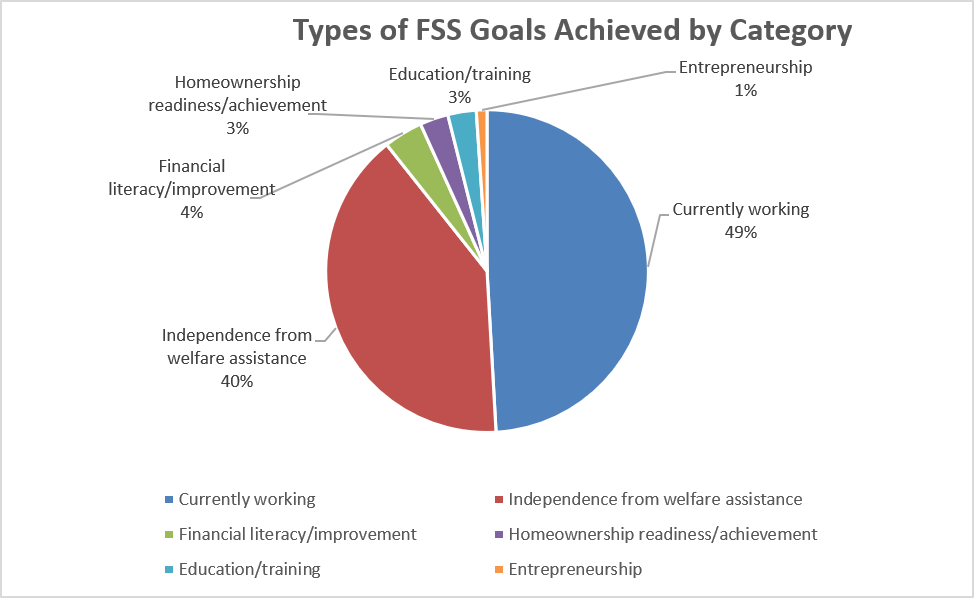
The chart below provides information on the types of goals achieved by FSS participants during the fiscal year. Note that if a participant had multiple goals of the same category, only one goal for each household was counted.
Status of HACA 5-Year PHA Plan Goals
HUD requires public housing authorities (PHAs) to prepare and submit PHA Plans. The PHA Plan is a guide to the housing authority’s policies, programs, operations, and strategies for meeting local housing needs and goals for the upcoming fiscal year. Housing authorities initially submit a 5-Year PHA Plan, followed by subsequent Annual PHA Plans until the next 5-Year Plan is due to HUD. Below is a summary of the progress HACA has made in meeting its goals and objectives described in the current 5-Year Plan, for fiscal years June 1, 2025-June 30, 2029. These updates are also included in HACA’s Proposed FY26-27 Annual Plan submitted to HUD in April 2026.
Goal 1. Maintain, improve, and implement HACA policy that supports affordable housing and fair housing.
- Continue to comply with fair housing laws and policies.
- Continue to progress to meet HACA’s regional fair housing goals under Alameda County’s Regional Analysis of Impediments to Fair Housing Choice (AI).
HACA continues to refer applicants, participants, and the general public who need access to fair housing services to ECHO Housing. ECHO Housing provides fair housing services and tenant/landlord services among other services. HACA also maintains a positive and collaborative working relationship with ECHO Housing and Bay Area Legal Aid to work through applicants and participant fair housing concerns. HACA sends eblasts to landlords to emphasize the importance of landlord compliance with various program requirements and to create efficiencies in working with HACA. HACA provided fair housing and reasonable accommodation training for all staff. HACA continues to provide services in multiple languages as needed.
HACA updated the Administrative Plan to streamline processes and incorporate HUD guidance. HACA provides lengthy initial voucher search times of 180 days to expand housing opportunity. HACA increased leasing in HUD-VASH program by 15%. HACA continues to administer numerous HUD and locally funded programs, including the Shelter Plus Care program, and is currently serving over 150 households through those programs. HACA anticipates successfully transitioning Emergency Housing Voucher participants to the HCV and Mainstream programs. HACA continues to work with the other housing authorities in the Oakland-Fremont HUD FMR area to evaluate the need to conduct a fair market rent study when new annual FMRs are issued and commission a study if such a study is needed. No study was needed during the period.
HACA also incorporated quarterly and annual program data reporting on its website to provide transparency on the status of HACA’s programs.
Goal 2. Expand the supply of assisted housing.
- Continue to explore opportunities that expand the supply of assisted housing to low-income families through the commitment and issuance of project-based vouchers, as funding is available, and by applying for additional HUD program funding.
In FY 2025-2026 HACA was awarded eleven Foster Youth to Independence (FYI) vouchers. Additionally, HACA anticipates requesting up to between 14 and 39 additional FYI vouchers in this fiscal year. Further, HACA submitted a Registration of Interest for HUD-VASH vouchers in accordance with Notice PIH 2025-21. HUD has not announced awards under this PIH Notice.
In FY 2022-2023 HACA awarded 147 new construction project-based vouchers (PBV) serving homeless and elderly families in the cities of Albany, Hayward, unincorporated Cherryland, and Newark. In April 2026, HACA anticipates entering into a PBV Housing Assistance Payment Contract for the only remaining project from the awards made in FY 2022-2023. The project will serve elderly families in the City of Newark. The project has 79 one-bedroom units, of which 20 will be PBV units. The project includes on-site health and wellness services, community room, gym, lounge, large outdoor lounge spaces, and is pet-friendly.
Goal 3. Increase operational efficiency and effectiveness.
- Continue to evaluate and update policies and procedures to ensure compliance, consistency, and efficiency in operations.
- Continue to utilize HUD’s Two-Year Tool regularly to ensure effective utilization of its vouchers and program funds.
- Continue to evaluate and adjust operations to improve the delivery of services to our constituents and to prepare for future growth.
HACA has been and continues to evaluate and update policies and procedures to ensure compliance and efficiency in operations, including changes required by HOTMA.
HACA uses HUD’s Two-year Tool and other trackers monthly to evaluate revenue, expenses, and program funding projections. HACA also consulted with CVR Associates, the technical assistance provider established by HUD, to assist HACA with transitioning its Emergency Housing Voucher (EHV) participants to the HCV program. HACA also received a waiver from HUD to place all EHV participants on its HCV waiting list. HACA has added its EHV participants to the HCV waiting list and is in the process of transitioning these participants to the HCV and Mainstream programs.
HACA entered into a contract with a vendor for waiting list management and services, including internet-based technologies, to improve customer service and timeliness of the waiting list process. HACA anticipates fully utilizing the system by June 2027.
Goal 4. Preserve and rehabilitate HACA’s/PACH’s existing affordable housing stock.
- Continue to assess preservation and rehabilitation needs of HACA’s existing affordable housing stock and rehabilitate its units as they become vacant and as funding allows.
HACA renovated or modernized existing housing units and complexes as needed. HACA worked to maintain minimal turnover time for vacated units, improving its occupancy rate from 95% in July 2025 to 98% in January 2026. HACA initiated Physical Needs Assessments for its owned/managed affordable housing stock that will be completed in FY 2026-2027 to identify immediate and long-term needs of the portfolio.
Goal 5. Assist as many qualified families as possible within available staff and financial resources.
- Continue to voluntarily administer the FSS program and the Home Ownership Program.
- Achieve and maintain over 95% utilization of either HACA’s HCV Annual Contributions Contract (ACC) units or HCV funding.
HACA continues to voluntarily administer the FSS program with 184 participants and the Home Ownership program with 8 participants.
HACA is currently utilizing over 95% of its budget authority.
Goal 6. Enhance business continuity capabilities in order to ensure that HACA’s operations and core business functions are sustainable and efficient.
- Continue to evaluate and adjust operations with continuity and succession planning in mind.
- Continue to update and maintain HACA’s cloud/remote infrastructure and seek opportunities to improve its systems.
Promoted professional development opportunities and staff succession planning, including promotion of an Administrative Analyst to Housing Programs Manager, hiring an Administrative Analyst, and contracting for procurement services until a permanent Procurement Manager is hired.
HACA continued to evaluate and upgrade technology systems, including upgrades to multiple data servers and beginning an upgrade to the existing electronic content management system. HACA also incorporated new systems for data analysis and will implement a new wait list management system by June 2027. Further, HACA conducted an evaluation of its website for accessibility and navigability to determine improvements needed.
Employment Information
During FY2025-2026, HACA employees completed trainings related to cybersecurity, harassment and workplace violence prevention, and fair housing and reasonable accommodations. In addition, relevant staff were trained on changes to inspections requirements based on the upcoming transition to National Standards for the Physical Inspection of Real Estate (NSPIRE). Staff also worked with a housing programs consultant throughout the fiscal year to review and update program policies and procedures.
As of the end of FY2025-2026, HACA had 72 budgeted full-time positions. During FY2025-2026, 1 non-management position was filled, and 2 management positions were successfully filled, including 1 promotion. As of the end of FY2025-2026, HACA had 8 vacant positions, including 7 non-management position and 1 management positions.